Can Astrology Predict the Stock Market?
No. Not if predict means telling us where an index will close, when a rally will break, or what a share will be worth next Thursday. I say that from inside astrology. I have no wish to strip the sky of meaning; I want to stop meaning from being passed off as advance knowledge. Astrology can describe a human encounter with uncertainty. It cannot read tomorrow’s price tape.
The market hates a blank space
A quotation on a screen looks precise. The future behind it is not. Every market participant must live with decisions made before the ending is available, and that open space is hard on the mind. We reach for cycles because a cycle returns. We reach for the sky because it seems ordered when the crowd below does not.
None of this makes market emotion imaginary. Investor-sentiment research has found discernible effects on prices, especially among assets that are difficult to value and easy to excite. Robert Shiller’s work on narrative economics likewise treats contagious stories as forces in economic life. A market can carry fear, confidence and imitation without being steered by Mars or timed by Saturn. Those are separate claims, and I will not slide from the first into the second.
Gann, before the mythology
For an English-speaking reader, financial astrology usually arrives wearing the name W. D. Gann. The first useful document is not a secret manuscript but a December 1909 profile in The Ticker and Investment Digest. It described a young market operator who spoke of periodic recurrence, natural law and the Law of Vibration. The magazine also reported an October demonstration of 286 trades, 264 profitable and 22 losing, with an ending result described as one thousand per cent of the original margin. This is a remarkable contemporary claim. It is not the same thing as a surviving, independently audited brokerage record.
There is a smaller but decisive detail. The 1909 article never calls Gann’s work astrology. He speaks of cycles, mathematics, vibration and laws of nature, refuses to disclose his method, and allows that no human being is infallible. Later accounts often flatten this ambiguous record into a much tidier legend: Gann possessed the planetary master key and therefore knew. The source itself does not grant us that sentence.
The astrological connection is nevertheless real. In The Tunnel Thru the Air, published in 1927, Gann tells the reader that a valuable secret is concealed in veiled language; his fictional trader openly invokes the stars and astrology while dealing in cotton. A coffee lesson dated 1954, attributed to Gann and preserved in later course compilations, uses heliocentric and geocentric positions, planetary aspects, and the Sun, Jupiter, Saturn, Uranus, Neptune and Mars. The novel documents astrology in Gann’s own published text. The attributed lesson places planetary work inside market instruction.
That is where I draw the line. I found public claims about cycles, astrology in the novel, and explicit planetary material in a later attributed lesson. I did not find a complete audited record or one fully stated method that an outsider could apply before an event and reproduce without interpretation. Stories of perfectly dated crashes, an infallible code and a fortune that proves the code are not thereby facts. The paper trail is genuine. The halo is larger.
Other names were already on the shelf
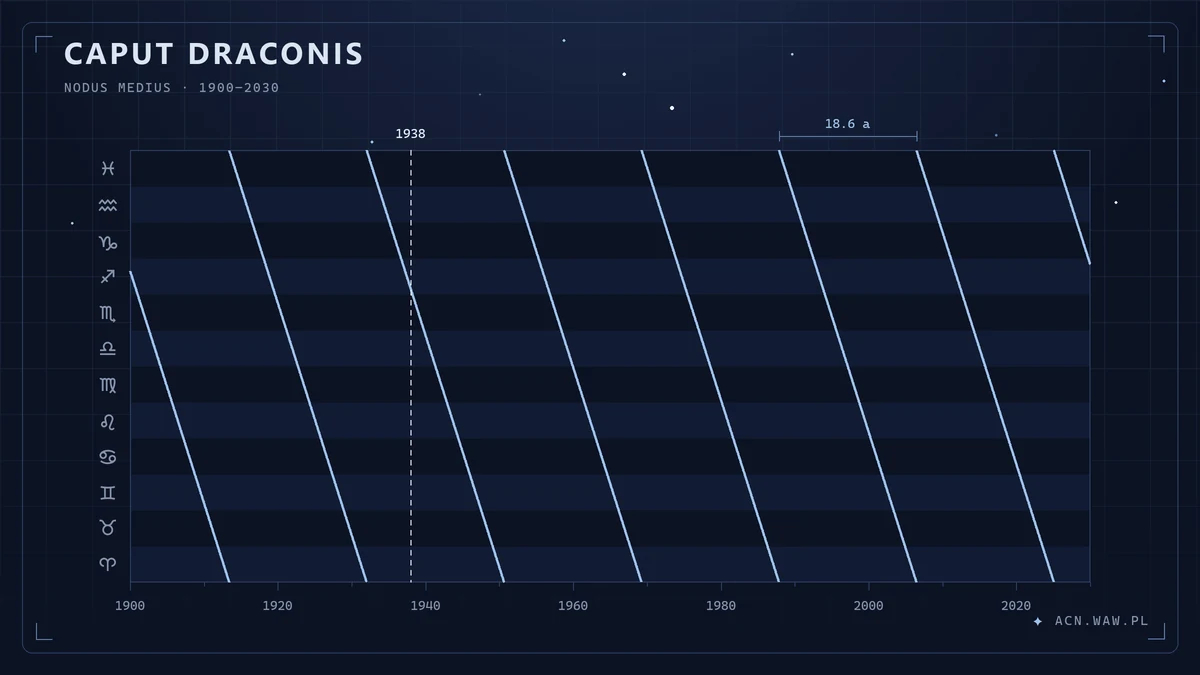
Gann did not create this current alone. The British astrologer Sepharial published The Law of Values in 1912. Its subject was stock and share fluctuation, and its contents explicitly included planetary values, transits and aspects. In 1938 Louise McWhirter published McWhirter Theory of Stock Market Forecasting. She treated the Moon’s North Node and its roughly nineteen-year circuit as the primary business cycle, then brought in lunations, transits, a chart for the New York Stock Exchange and charts for particular companies. This was a recognisable early-twentieth-century practice on both sides of the Atlantic, not a recent ornament placed on Wall Street history.
Raymond Merriman belongs to the later lineage. His publisher dates the MMA Cycles Report to 1982 and describes work connecting market turns with conjunctions, squares, oppositions, trines, sextiles and planetary stations, particularly involving Jupiter, Saturn, Uranus, Neptune and Pluto. Merriman also says that astrology by itself does not reveal whether a turn will be a high or a low; he combines the dates with market cycles and chart patterns. That makes the claim more qualified, not independently established.
I labour these names and dates because scepticism should be accurate. Financial astrology is not imaginary history. People published it, taught it and built careers around it. A tradition can be historically real and predictively unsuccessful at the same time.
One sky can be made to promise several different things
The claims are not one claim. McWhirter’s North Node was supposed to trace a broad business rhythm, while lunar phases and transits filled in shorter movements. Material attributed to Gann converts prices into degrees on a 360-degree circle and compares them with planetary longitudes from Earth-centred and Sun-centred views. Merriman identifies windows around aspects and stations of the slower planets, assigning longer celestial cycles to longer market trends.
Beyond those schools lie claims about full moons, new moons and Mercury retrograde. The promised result may be direction, a reversal date, volatility, volume or mood. The chosen market may be an index, a company, a commodity or a currency. This breadth is not a harmless detail. It gives failure many exits: another planet, another window, another definition of what the event was supposed to be.
Celestial repetition is not the disputed part. Conjunctions return and lunar phases recur. The disputed step is the leap from repeated geometry to repeated price behaviour. The next Saturn aspect does not restore the same interest rates, regulations, debts, technologies, participants or information. The sky can revisit an angle. History does not restage the entire room.
The studies do not converge
There are peer-reviewed papers that report astrological-looking associations, and it would be dishonest to pretend otherwise. A 2006 study covering 48 countries found lower returns around full moons than around new moons. It found no similar relation with trading volume or volatility, and its authors explicitly noted that searching many possible patterns can produce apparently significant results by chance. A 2011 study of 62 international indices changed the comparison, strengthened a new-moon finding and found no overall full-moon effect. The result did not remain the same when the question was framed differently.
Mercury supplies another caution. Research on major Indian indices from 1998 to 2018 reported higher returns during retrograde periods. An earlier study of American indices from 1993 to 2012 found lower volatility during those periods, contrary to the astrological expectation it examined. Both findings can be entered in the record. They do not combine into a stable capacity to predict a price or even a consistent account of what Mercury retrograde is meant to do.
A statistical association in old prices is not advance knowledge. It may belong to the particular years chosen, the way days were grouped, chance, or another influence moving at the same time. The decisive test comes later: does a precise claim, fixed beforehand, survive new data and independent repetition? I found no independent evidence built from a claim fixed in advance, tested on new data and repeated by others.
The beautiful old chart is the dangerous one
A fair test must be less poetic than the claim. Before the market moves, it should state the celestial event, the market, the time window and the exact meaning of success. Every eligible date must remain visible, including the dates followed by nothing. The same terms must then face a later period the author has not inspected, and another person must be able to repeat the work. Without those conditions, we are interpreting a finished story.
The freedom to search is powerful. Choose among planets, aspects, signs, houses, stations, lunar phases, several markets, several window sizes and several meanings of reversal, and one combination will eventually sit beautifully on an old chart. No deception is required. A large menu and enough patience will do.
This is not an accusation peculiar to astrology. Finance researchers have shown how easily impressive historical performance can appear after many possible rules are tried, how publication favours striking findings, and how reported anomalies often weaken under stricter standards or in fresh data. Financial astrology enters that difficult territory with an especially generous supply of symbols and dates.
Base rates complete the illusion. If each aspect receives several trading days on either side, and a hit may be a peak, a trough, acceleration, calm or turbulence, much of the calendar can qualify. The count that matters includes ordinary turns without the aspect, aspects followed by silence, and every alternative discarded before the winning example was shown. One circled date proves very little.
Once the ending is known, the symbols become obedient
After a crash, Saturn was plainly the wall, Uranus plainly the shock, and the opposition plainly rupture. Before the crash, every one of those symbols carried several plausible meanings. Hindsight bias narrows that earlier field and makes the known outcome feel more foreseeable than it was. A crash explained as inevitable on the following morning was not predicted. It was interpreted after arrival.
Apophenia is the mind’s readiness to find a pattern in noise. In a series of experiments, Jennifer Whitson and Adam Galinsky reported that people made to feel less control perceived more false images, superstitious links, conspiracies and spurious correlations, including correlations in stock-market information. This does not make every perceived pattern false. It tells me that uncertainty should make my standards firmer, not more forgiving.
Then memory edits the archive. A successful call is copied for years. A failed date sinks, is deleted, or receives a new symbolic reading. We meet the forecasts that survived the story, not the whole population that began it. This is survivorship bias in story form, and one reason the dead master acquires a record no living practitioner can match.
The appeal persists because the story gives uncertainty a face. Markets really do contain emotion and contagious narratives; that is precisely why a cosmic drama can feel true before it has proved anything. Saturn is easier to look at than randomness. Relief, however, is not knowledge.
I keep Mercury, Jupiter and Saturn
I do not need to expel the planets. I need to put them in an honest place. Mercury belongs to exchange, trade, messages and speed. It can describe how another person’s certainty enters my mind before I notice the door opening. It cannot give me tomorrow’s closing price.
Jupiter gives expansion, confidence, luck and the appetite to believe that more will continue to mean better. Saturn gives time, limit and consequence. In their company I can recognise greed, patience, fear and appetite for risk as human experiences with shape. They are not price signals. They are faces in a mirror.
Nor is a birth chart a map of future quotations. It can hold questions about the person meeting uncertainty: the hunger to control, the need to be right, the urge to turn a gain into destiny, or the freezing dread of loss. This is a modest use of astrology. Modesty is not a defect when the alternative is a false promise.
No: not as prediction
Financial astrology is a real historical current, not an invention assembled after the fact. It has documented books, practitioners and concrete planetary claims. It also has Gann legends larger than their sources, findings that shift with the sample, and searches flexible enough to reward hindsight. On that record, I found no independently demonstrated ability to predict market prices under ordinary standards of advance testing and repetition.
The sky is not a ticker. Greed and fear do have faces, and I know their names. That is where astrology can speak truthfully: not about the next price, but about the human being who cannot stop wanting to know it.