Online astrology tools worth using
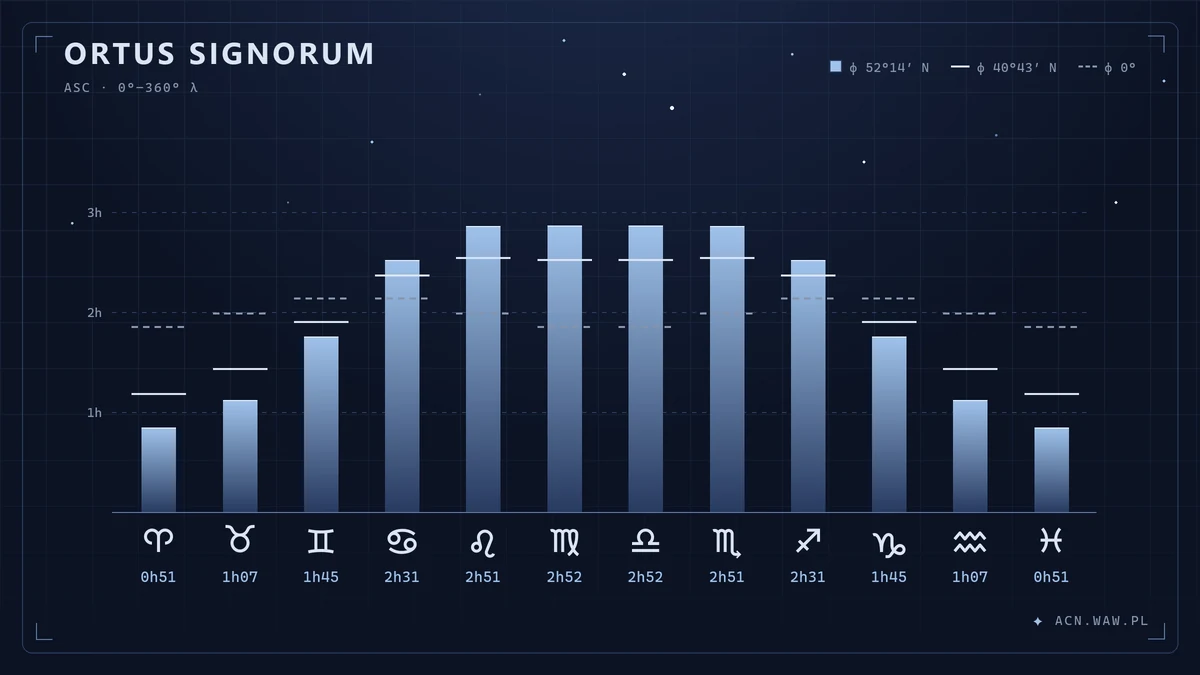
A birth chart used to cost an evening: a heavy book of ephemerides, a table of houses, a sharp pencil and a good deal of patience. Online astrology tools now draw one in less time than it takes to blink. Here is what they are, what each of them is for, how to tell a careful one from a careless one, and where their work ends — because software can rebuild the sky to the arc-minute and still not know how to read it.
The machine counts, the astrologer reads
For most of its history astrology was also arithmetic. To see where the planets stood at someone's birth, an astrologer opened the ephemeris, converted local clock time into sidereal time, looked up the right latitude in a table of houses and interpolated between columns. One chart could take a whole evening, and a slip at any step carried into every step after it. Software took that labour away, and I am glad it did. What went with the labour, though, was a feeling for what a chart is made of. When the wheel appears after a single click it is easy to treat it as revelation rather than as a sum that accepted some data and some assumptions.
So before I say which online astrology tools are worth your time, I want to open one up. And one caveat I will keep returning to: a program can rebuild the sky over a given moment and place with a precision the old astrologers could only dream of, but it cannot tell you what that sky means in a life. The counting belongs to the machine and the meaning belongs to people. That is not a flaw in the tools. It is a division of labour.
What happens inside an astrology program
Every serious tool starts the same way. It turns the birth date, time and place into Universal Time, then asks where the Sun, the Moon and the planets stood at that instant. The positions come from an ephemeris. The most precise ones are produced by NASA's Jet Propulsion Laboratory, and a great many astrology programs use them either directly or through the Swiss Ephemeris, a library the Swiss firm Astrodienst has developed since the 1990s. As a result, good tools disagree with one another by fractions of an arc-minute at most. The differences that actually change a chart almost never come from astronomy.
They come from the input. The birth time sets the angles of the chart. The Ascendant — the sign rising on the eastern horizon — moves about one degree every four minutes on average, so an hour's error is roughly fifteen degrees: often a different rising sign and a completely different set of houses. And the pace is uneven. Seen from New York, Aries and Pisces clear the horizon in a little over an hour, while Virgo and Libra take about two and a half. A Pisces rising leaves very little room for a careless clock.
Place matters just as much, because houses are measured from the local horizon. The same instant over Boston and over Denver gives the same planets in the same signs but different houses. That is why a good tool asks you to pick your birthplace from a list, with its coordinates attached, instead of guessing from whatever you typed.
The least obvious trap is the clock itself. During the Second World War the United States ran on year-round War Time from February 1942 to September 1945, an hour ahead of standard time even in winter; from 1945 until the Uniform Time Act of 1966, states, counties and even single towns chose for themselves whether and when to change their clocks, and most of Arizona still does not. Britain went further and spent the summers of 1941 to 1945, and again 1947, on Double Summer Time, two hours ahead of Greenwich. Someone born in Chicago in January 1944 was born on War Time. A program that assumes ordinary winter time will be an hour out, and the Ascendant can slide by anything from about twelve degrees to twenty-five, depending on the rising sign. Good tools rely on a historical time-zone database and show you the Universal Time they used. Look at it before you read a single house.
The birth chart: where every online astrology tool begins
The tool that matters most is the one that draws the birth chart, the map of the sky at the moment of birth. You get a wheel with the twelve signs, the houses and the angles, the planets placed to the degree, and the aspects — the meaningful angles between planets — usually with an orb that says how far each one is from exact. A good chart also comes with a table. The wheel shows the pattern; the table lets you check the detail.
This is also where you meet the choice of house system. Placidus is the most widely used in Western astrology. Equal and whole-sign houses are simpler and keep working at high latitudes, where Placidus breaks down. Koch and Regiomontanus have loyal followings of their own. There is no single right answer, and Astrodienst says as much in its own FAQ: the choice belongs to the astrologer. What matters is that a tool tells you which system it used and lets you change it.
If the birth time is unknown, an honest tool says so plainly. It shows the planets in their signs and the aspects between them, and it does not pretend to know the Ascendant or the houses. The Moon needs care too: it travels about thirteen degrees a day, so without the hour you may not even know which sign it was in. That is how I approached my portrait of Napoleon — his birth hour is not securely documented, so the reading rests on the Sun and the planets and draws no angles at all. A chart like that has real value, as long as nobody sketches in a rising sign from imagination.
Working with time: transits, progressions and returns
Transits set the current positions of the planets against the birth chart: which planets are crossing important points in the map, and what aspects they make there. It is the most common way of working with time, and the easiest to misuse — a list of next month's transits turns into a list of fears with very little effort.
I prefer tools that show a transit as a period, with a beginning, an exact hit and an end, rather than as a single alarming date. Saturn hovering near your natal Sun for several months — forward, backward, forward again — describes a process, not an event pinned to a Tuesday. Progressions and returns belong to the same family; the solar return, for instance, is a chart for the year that runs from one birthday to the next. The rule is the same everywhere: learn the birth chart first, then ask about time.
Two charts at once: synastry and composites
Synastry lays one birth chart over another and looks at how one person's planets answer the other's. A composite chart goes a step further and builds a single map out of two, a chart of the relationship itself. I like both because they speak about dynamics rather than verdicts: what flows easily between two people and what needs a conversation. The popular sun-sign compatibility pages are a far smaller game — they compare one sign with one sign, a twelfth of each chart — and they are fine as a talking point, not as grounds for any decision that matters. One more thing people rarely mention: synastry means entering someone else's birth data. It is kind to ask them first.
The sky right now
The simplest tools just show what the sky is doing: the phase of the Moon and the sign it is passing through, planets changing signs, retrograde periods, the aspects of the coming days. They are the digital heirs of the printed ephemeris and the astrological calendar, and I am fond of them because they teach you to notice rhythm before you interpret anything.
Moon phases are pure astronomy, so you can check them against sources with no astrology in them at all: timeanddate, or the Moon visualisations published by NASA's Scientific Visualization Studio. If an astrology app's full Moon differs from those by more than a minute or two once time zones are accounted for, the problem is in the app, not in the sky.
Horoscopes, general and personal
A sun-sign horoscope, daily or monthly, speaks to a twelfth of humanity at once. It works from the Sun sign and the current movement of the planets relative to it, often treating the Sun sign as the first house by convention. That is an honest genre as long as it does not pretend to be more. A good general horoscope describes the mood of a period and invites reflection; it does not tell anyone what will happen to them.
A personal horoscope is a different thing: transits measured against your own chart, with your own Ascendant and houses, and it needs your full birth data. The quickest way to tell the two apart is to notice what the tool asks for. If your sign is enough, it is talking to everyone born under that sign.
Horary: a chart for a question
Horary astrology casts a chart not for a birth but for the moment a serious question is asked. It is one of the oldest branches of the art, and its classic textbook is still William Lilly's Christian Astrology of 1647. A program can do the arithmetic — the chart, the house rulers, the aspects and the order in which they perfect — but horary judgement has rules of its own, including rules about when a chart is not fit to be judged at all. Online horary tools range from a bare chart to an automatic verdict; treat the second kind with care and look for whether it shows the reasoning behind its answer. Electional astrology, horary's close relative, runs the other way: instead of reading a moment that has already arrived, it looks for a good moment to begin something.
Numerology and tarot, the neighbours
Many astrology sites carry numerology and tarot as well. They are neighbouring traditions rather than branches of astrology, though they often travel together. A numerology tool does simple sums — adding the digits of a birth date down to a single number, the life path, for example — so every correct tool will give the same result; the differences lie in the system used for names, Pythagorean or Chaldean, and in how the number is described. A tarot tool shuffles and turns cards, which in practice means drawing at random. Nothing wrong with that, as long as the tool does not claim that fate has spoken. A card is an image to think with. Its worth lies in the question you ask yourself while looking at it, not in the machine that drew it.
How to choose an online astrology tool
Before I trust a result, I check a short list. The first item is the source of the calculations. A good tool is open about where its planetary positions come from, which zodiac it uses — tropical in Western astrology, sidereal in Vedic, the two now about twenty-four degrees apart — and which house system it has applied.
The second is the input: a birthplace chosen from a list, birth time converted with historical time zones, and the Universal Time it used on display. If your family remembers your birth as somewhere around lunchtime, find the birth certificate. Astrologers have graded this for a long time: the Astro-Databank collection uses the Rodden Rating, where AA means the time comes from a birth record and a time quoted from memory ranks lower.
The third is the explanation. A wheel on its own, however beautiful, tells most people very little. A good tool explains what it shows, separates the certain from the uncertain, and does not bury you in stock sentences that would fit anyone. The fourth is privacy. A birth date, time and place are personal data, and in synastry they belong to someone else as well, so it is worth knowing whether a tool demands an account, what it stores and why.
The fifth is the simplest. If a tool frightens you — a dangerous month ahead, a planetary pattern that threatens misfortune, a fee to have it lifted — close the tab. Astrology is a language of symbols, not a sentence passed on anyone, and no tool has the right to use it to make people afraid.
A few online astrology tools worth knowing
This is not a ranking, because each of these does a different job. Think of it as a small map.
Astrodienst, the company behind astro.com, is one of the oldest homes of astrology on the web and the firm that created the Swiss Ephemeris. It offers an enormous range of charts and settings, many house systems, both the tropical and the sidereal zodiac, and alongside them Astro-Databank, a collection of birth data of well-known people with a rating of how reliable each record is. It suits anyone who wants control over every parameter.
Astro-Seek is a sprawling catalogue of free charts — natal charts, transits, synastry, progressions, returns and dozens of smaller listings — with a wide choice of house systems. It can feel overwhelming, but if you like to rummage you will find almost anything there. Phone apps such as Co–Star take the opposite approach: a short daily message drawn from your birth chart. They are convenient and a gentle first step into astrology, but brevity has a price, and one sentence cannot carry a complex chart. At the far end sit desktop programs like Solar Fire, used by professional astrologers for decades — precise and deep, but paid, and they take time to learn.
Book of Horoscopes, at bookofhoroscopes.com, gathers the birth chart and its relatives in one place — transits, synastry, the composite chart, progressions, directions, solar and lunar returns, astrocartography — along with horoscopes, horary and electional astrology, numerology, tarot and the current sky with its aspects and retrogrades. Its natal chart works without an account or an email address, the birthplace is picked from a list, and the birth data stays in your browser. It offers two house systems, Placidus and equal houses; if you work with whole-sign houses or Koch, the larger catalogues above will serve you better.
For Moon phases the astronomical sources I mentioned earlier are all you need. And if you would rather understand what a chart shows before you open one, start with what astrology is and how to read the zodiac signs.
Where to begin
If someone asked me where to start, I would say this. Find your exact birth time first. Then cast your own chart in a tool that shows what it used, and sit with it for a while without hurrying: the Sun, the Moon, the Ascendant, the few tightest aspects. Only when the map has become familiar is it time for transits, and after them for synastry.
An astrology tool is a telescope. It shows the sky more sharply than the naked eye ever could, but it does not tell you what to see there. That part stays with the person looking — and rightly so, because that is exactly where astrology begins.